

Why Metal Roofing is Colorado’s Smart Investment
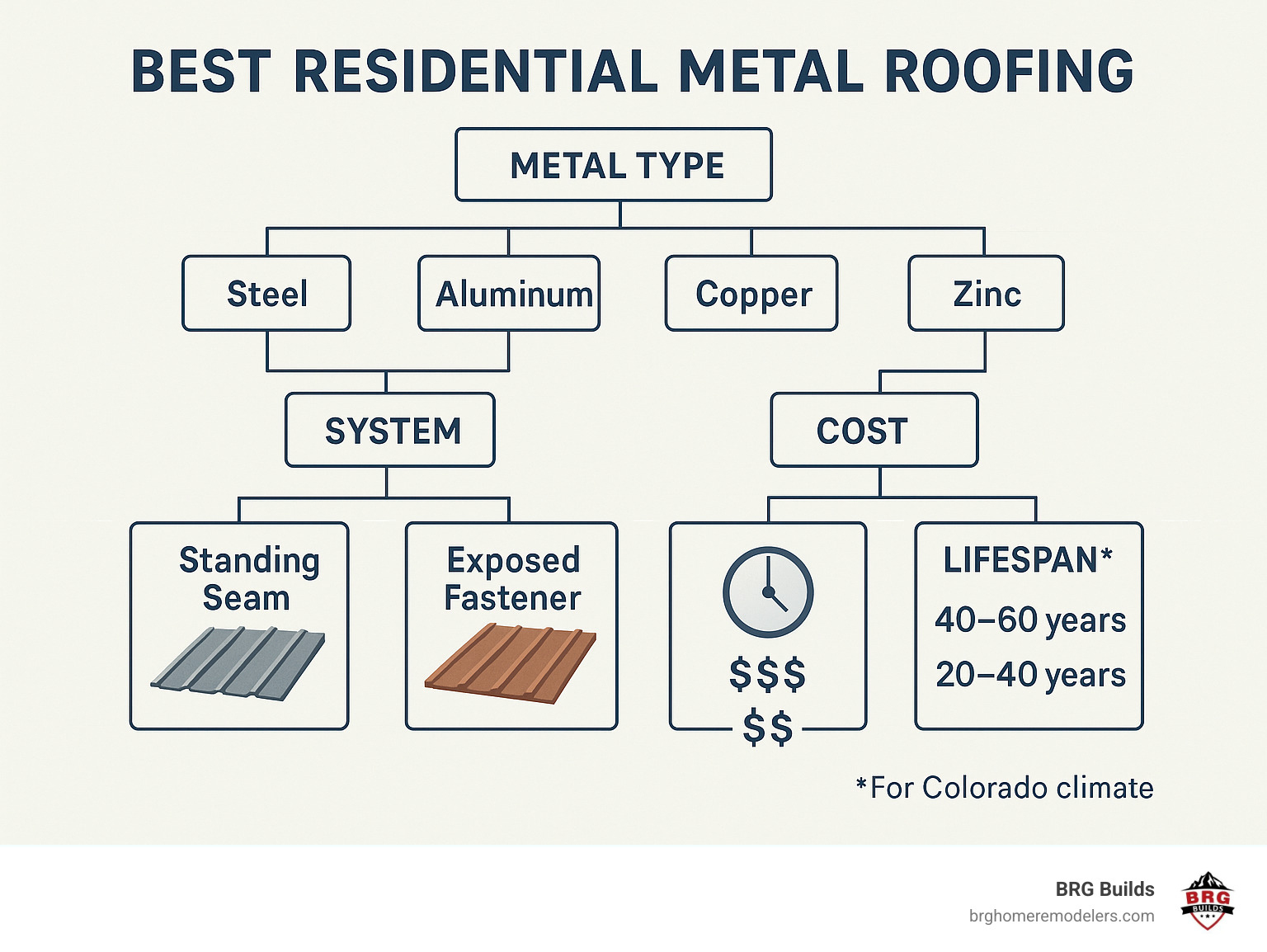
Best residential metal roofing delivers superior durability, energy efficiency, and wildfire protection for Colorado homes. Here’s what you need to know:
Top Metal Roofing Materials:
- Steel (Galvalume) – Most popular, 30-50 year lifespan, $9-18/sq ft
- Aluminum – Lightweight, corrosion-resistant, ideal for coastal areas
- Copper – Premium choice, 100+ year lifespan, develops protective patina
- Zinc – Self-healing properties, 50+ years, popular in Europe
Best System Types:
- Standing Seam – Hidden fasteners, sleek appearance, handles thermal movement
- Stone-Coated Steel – Traditional shingle look, Class 4 hail rating, 120 mph wind resistance
- Exposed Fastener – Budget option for sheds/garages, requires screw maintenance
Metal roofing sales have doubled since 2000, now capturing 8% of the residential market. Colorado homeowners especially value metal’s ability to withstand hail storms that cause hundreds of millions in damage annually across the Front Range.
The upfront cost runs 3 times more than asphalt shingles, but metal roofs last 30-50+ years compared to replacing asphalt 2-3 times. According to the 2024 Cost vs Value Report, homeowners recoup 48.1% of installation costs at resale.
As someone who’s completed over 100 successful roofing projects across Colorado, I’m Benny Izquierdo, and I’ve seen how choosing the best residential metal roofing transforms homes with decades of reliable protection.
Understanding Residential Metal Roofing Materials
Choosing the best residential metal roofing for your Colorado home starts with understanding your material options. After helping hundreds of homeowners across Denver, Castle Rock, and Colorado Springs, I’ve learned that the right metal makes all the difference when facing our intense hail storms, heavy snow loads, and dramatic temperature swings.
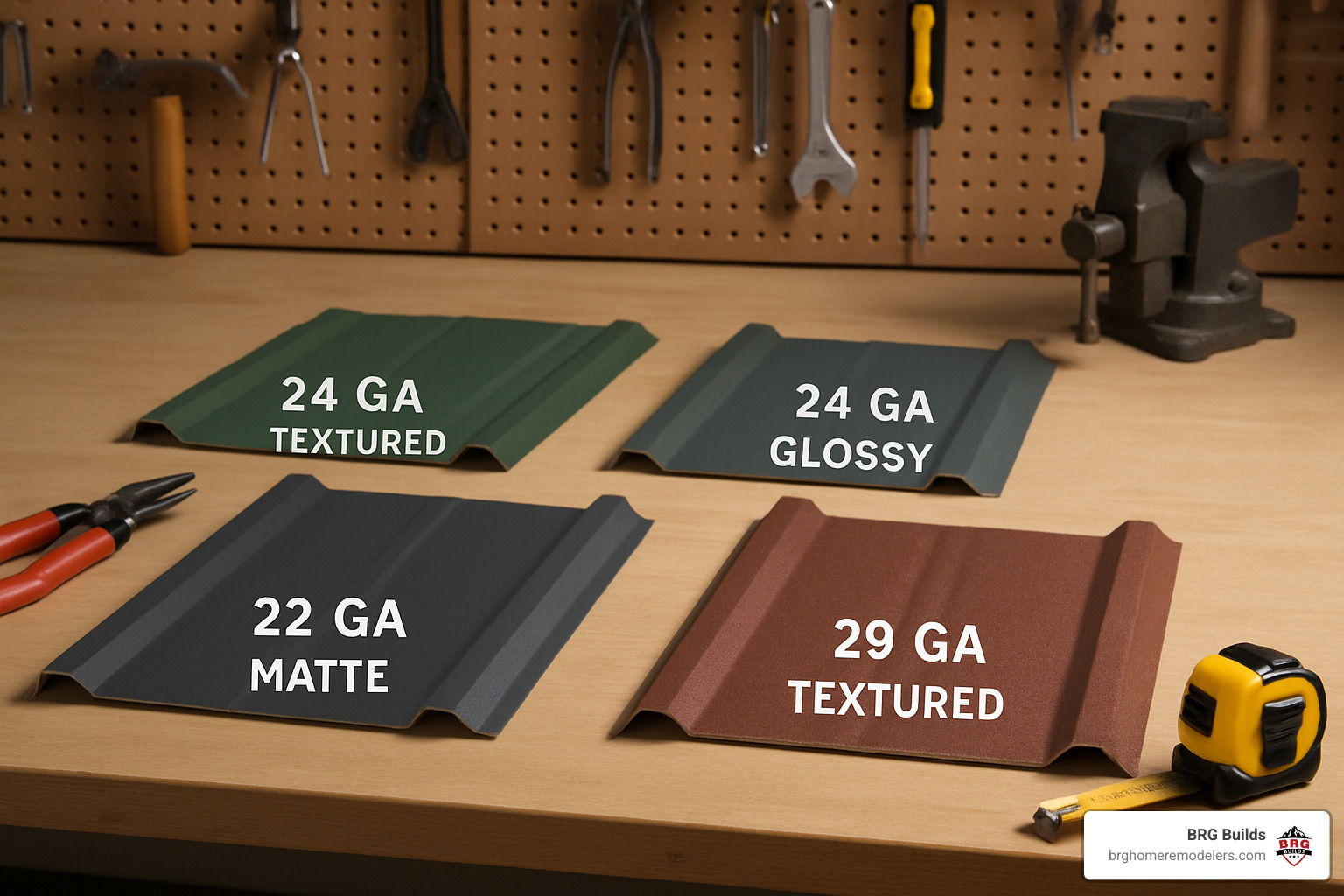
Steel dominates residential metal roofing because it delivers the perfect balance of strength, affordability, and longevity. When we recommend steel, we’re usually talking about Galvalume – a special coating that’s 55% aluminum, 43.4% zinc, and 1.6% silicone. This combination gives you aluminum’s heat reflection plus zinc’s rust protection, creating a coating that outlasts basic galvanized steel by decades.
Gauge thickness can make or break your roof’s performance. Lower numbers mean thicker metal, and we always recommend 24-gauge or 22-gauge for Colorado homes. Yes, 29-gauge costs less upfront, but I’ve seen too many thin roofs develop that wavy “oil-canning” look or get damaged by hail that thicker panels would easily handle.
Aluminum shines when weight matters or you need maximum corrosion resistance. It weighs about half as much as steel, making it perfect for older homes where structural capacity might be questionable. Aluminum also naturally resists corrosion without protective coatings, though it costs more than steel.
Copper, zinc, and stainless steel represent the premium end of the market. Copper develops that gorgeous patina over time while offering near-century lifespans. Zinc offers similar longevity with fascinating self-healing properties, while stainless steel provides exceptional durability at a premium price.
Steel vs. Aluminum Essentials
Steel wins on affordability and versatility for most Colorado applications. Galvanized steel works fine, but Galvalume’s improved durability easily justifies the small cost bump. Steel also handles thermal expansion better than aluminum and accepts paint finishes more readily.
Aluminum costs more but weighs roughly half as much as steel. This becomes crucial for complex roof designs or older homes where every pound matters. Aluminum also maintains its appearance longer since it can’t rust, though it can develop white corrosion under certain conditions.
Premium Lifetime Metals: Copper, Zinc, Stainless
Copper represents the luxury end of residential metal roofing. That initial bright penny color gradually transforms into a protective patina that can take 10-30 years to fully develop into the classic verdigris. What makes copper special is its near-century lifespan – I’ve worked on copper roofs from the 1920s that still perform flawlessly.
Zinc offers similar longevity with even more impressive self-healing characteristics. Scientific research on zinc roofs shows how zinc’s patina actually repairs small scratches and protects against corrosion. It’s wildly popular in Europe but remains uncommon here, mainly due to cost and limited installer experience.
Stainless steel provides exceptional durability but costs nearly as much as copper without the aesthetic appeal. We rarely recommend it for residential applications unless you’re dealing with extremely harsh environmental conditions.
Choosing the Right Metal Roof System for Your Home
Once you’ve selected your metal material, the next crucial decision is choosing the right roof system. Think of this as selecting how your metal roof “goes together” – and this choice can make or break your investment.
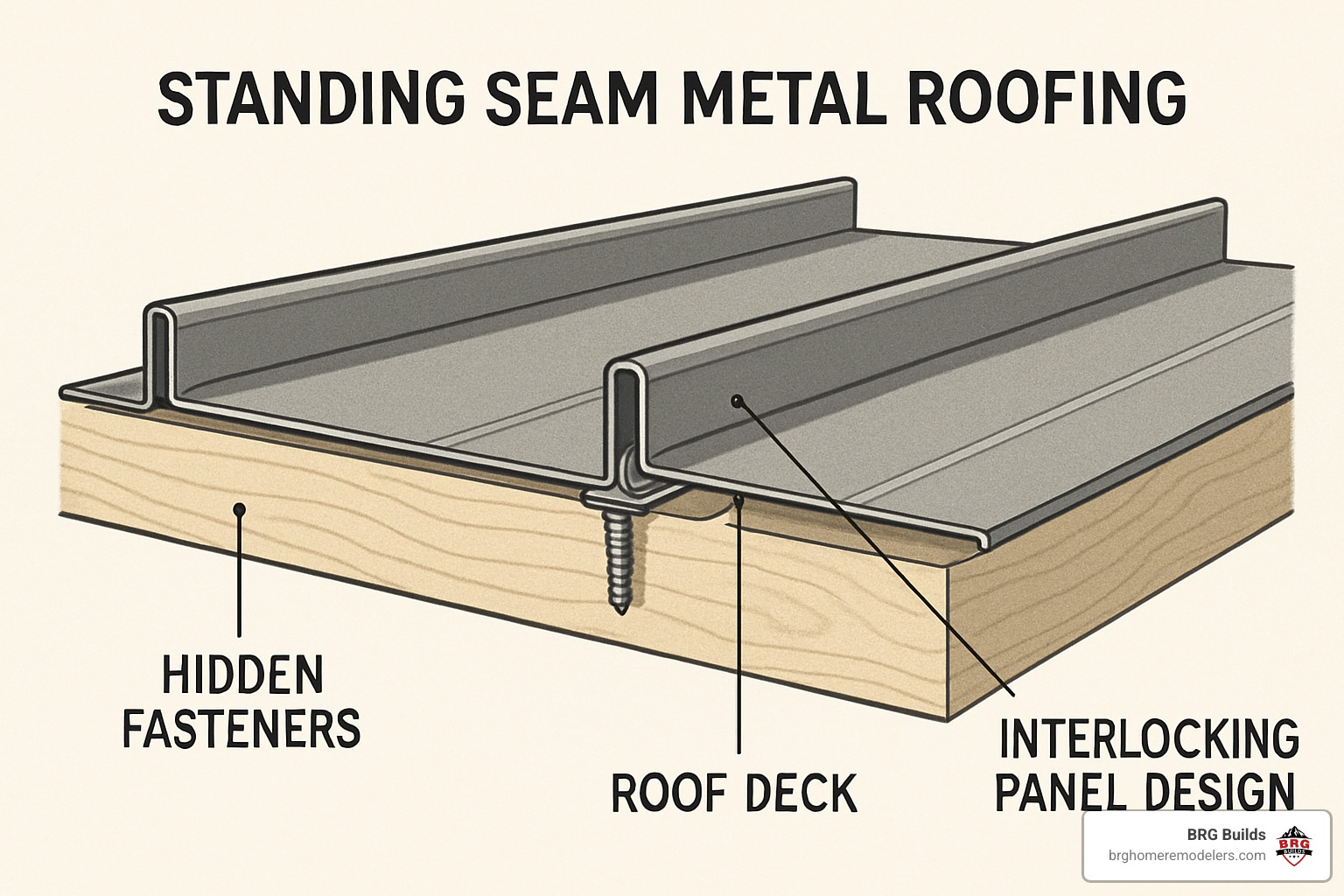
The best residential metal roofing systems fall into three main categories. Standing seam systems use hidden fasteners and create clean, modern lines. Exposed fastener panels offer budget-friendly installation but require more maintenance. Stone-coated systems give you metal’s durability while looking like traditional shingles or tiles.
Standing seam represents the gold standard for residential metal roofing. These systems use interlocking panels with raised seams that snap or fold together, hiding all fasteners beneath the surface. The panels connect with clips that allow thermal movement – crucial for Colorado’s wild temperature swings.
Stone-coated steel systems deserve special mention because they solve the aesthetic challenge many homeowners face. These panels combine steel’s durability with ceramic-coated stone granules that create convincing shake and slate looks. They earn Class 4 hail ratings and resist wind uplift up to 120 mph – perfect for Colorado’s severe weather patterns.
Hidden-Fastener (Standing Seam) Advantages
Standing seam systems earn their premium pricing through superior performance and sleek lines that age gracefully. The hidden fasteners eliminate maintenance headaches, while glide clips allow panels to expand and contract without stressing connections.
The energy savings add up over time too. Standing seam systems create tight seals that reduce air infiltration, and they accept cool-roof coatings that reflect summer heat. Many homeowners see noticeable drops in their cooling costs.
Thermal movement handling sets standing seam apart from other systems. Colorado’s temperature extremes cause metal to expand and contract significantly. Standing seam’s clip system accommodates this movement naturally, preventing fastener fatigue and panel distortion.
Exposed-Fastener Panels: Budget Trade-Offs
Exposed fastener systems cost roughly half as much as standing seam, making them attractive for budget-conscious projects. However, those visible screws create maintenance requirements you need to understand upfront.
Plan for screw resets every 5-10 years as the neoprene washers deteriorate under UV exposure and thermal cycling. We recommend exposed fastener systems primarily for sheds and barns, or for homeowners who appreciate the industrial aesthetic and don’t mind periodic maintenance.
Stone-Coated Shingles & Tiles
Stone-coated systems solve the biggest objection to metal roofing: appearance. These systems use steel panels coated with ceramic-coated stone granules, creating authentic shake and slate looks that satisfy even the pickiest homeowners or HOA requirements.
The stone coating provides excellent sound damping while maintaining metal’s superior fire rating and durability. Class 4 hail ratings and high wind resistance make stone-coated systems excellent for Colorado’s challenging weather. More info about roofing services shows how we help homeowners steer these important system choices.
Cost, Lifespan, and ROI: What Homeowners Need to Know
Let’s talk numbers – because while best residential metal roofing costs more upfront, the long-term math tells a completely different story than that initial sticker shock suggests.
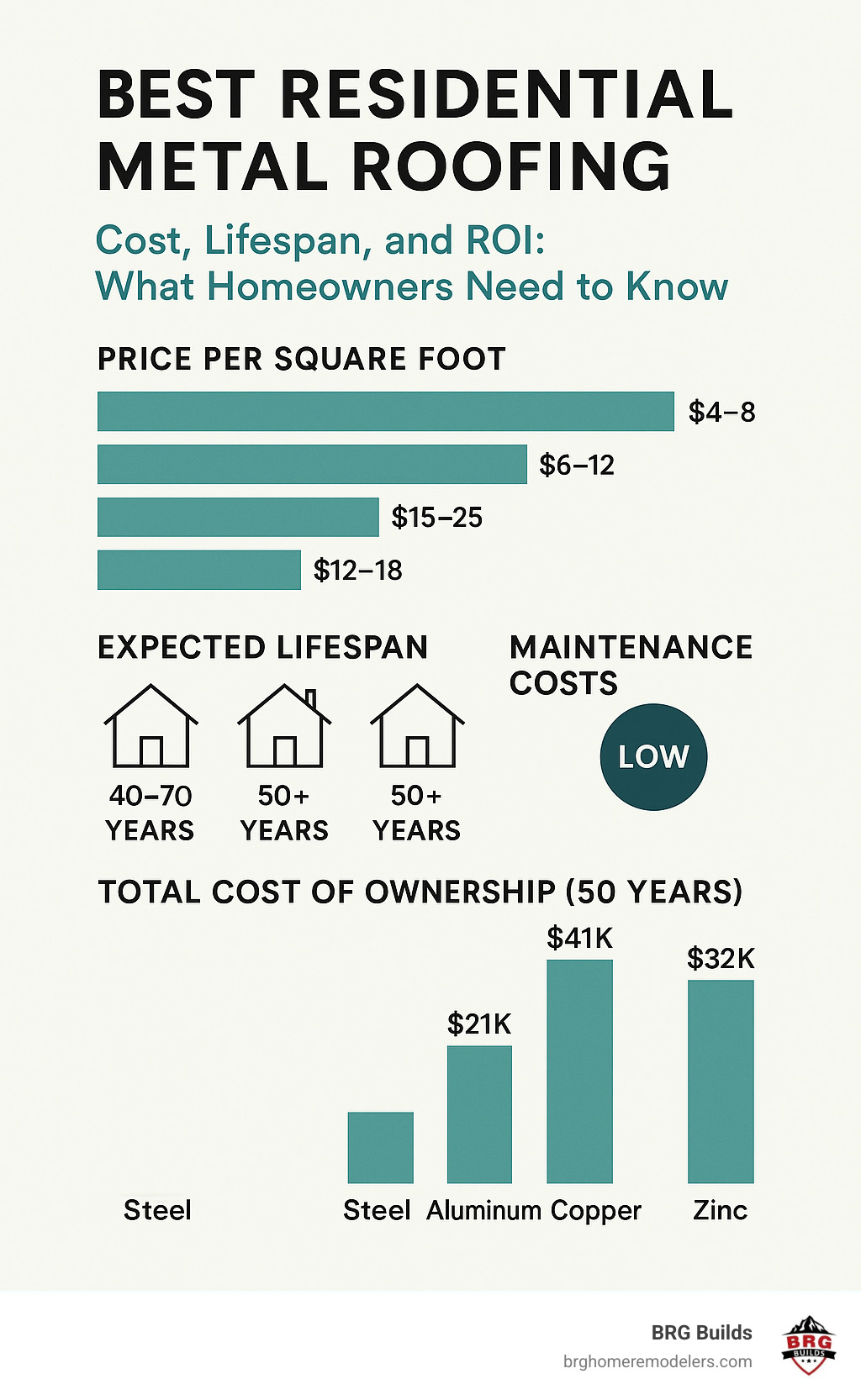
When homeowners first hear that metal roofing costs at least 3 times more than asphalt shingles, I understand the initial reaction. But while you’re replacing those asphalt shingles 2-3 times over the next 30-50 years, your metal roof just keeps protecting your home.
The financial benefits extend beyond avoiding replacement costs. Many insurance companies offer discounts for impact-resistant roofing – especially valuable here on Colorado’s hail-prone Front Range. Energy savings average 20% on cooling costs thanks to metal’s natural reflectivity.
Real Numbers: Steel, Aluminum, Copper, Zinc Pricing
Based on our recent installations across the Denver metro area:
Steel (Galvalume) runs $9-18 per square foot installed and delivers the best value for most homeowners. Standing seam systems cost $14-18 while exposed fastener options run $9-13. You’re looking at 30-50 years of protection with minimal maintenance.
Aluminum pricing hits $14-20 per square foot installed, with the premium justified by its lighter weight and natural corrosion resistance.
Copper represents the luxury tier at $22-32 per square foot installed. When you’re getting 100+ years of protection, you’re essentially buying the last roof your home will ever need.
Zinc falls between aluminum and copper at $19-27 per square foot installed. Those self-healing properties deliver 50+ years of performance.
Gauge thickness significantly impacts both cost and performance. We’ve found 24-gauge hits the sweet spot – thick enough to handle Colorado’s hail and snow loads without the premium cost of 22-gauge material.
ROI & Home-Value Boost
The 2024 Cost vs Value Report shows homeowners recoup 48.1% of metal roof costs at resale – about $24,034 on a $49,928 installation. However, this doesn’t capture the full financial picture.
Those 20% energy savings compound annually. If your summer cooling bills run $200 monthly, you’re saving $40 each month or $480 yearly. Over 30 years, that’s approaching $15,000 in energy savings alone.
Insurance discounts can reach 10-15% for impact-resistant roofing in hail-prone areas. On a $2,000 annual premium, that’s $200-300 yearly savings.
The real ROI magic happens in avoided replacement costs. A quality metal roof eliminates 2-3 asphalt roof replacements over its lifespan, representing $30,000-60,000 in costs you’ll never have to pay.
Installation, Maintenance, and Common Mistakes
Here’s something I’ve learned after three decades in Colorado roofing: the best residential metal roofing materials mean nothing if they’re not installed properly. I’ve seen too many homeowners spend premium money on quality materials, only to have problems because their contractor cut corners or lacked metal roofing experience.
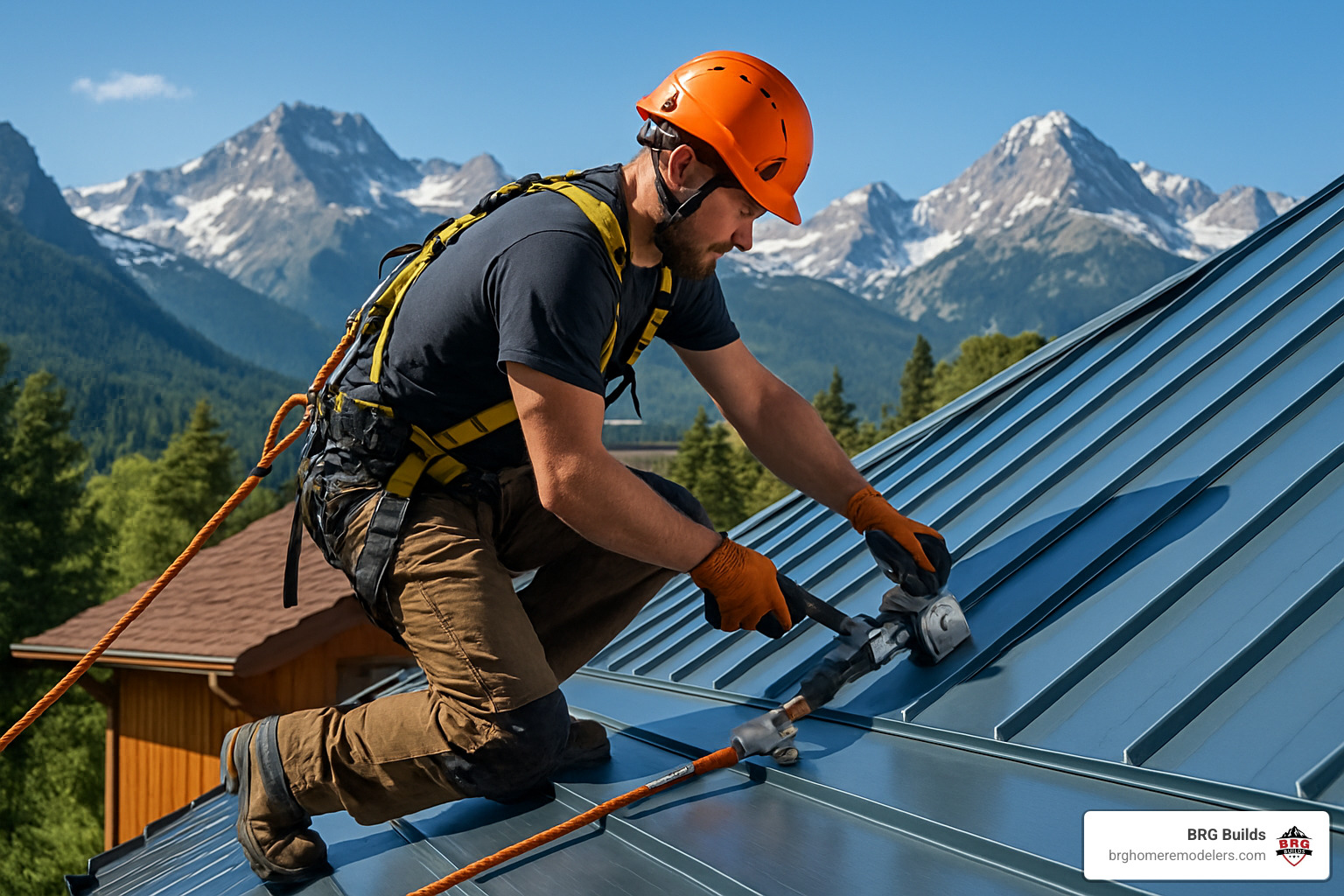
Metal roofing isn’t like installing asphalt shingles where small mistakes might not show up for years. With metal, installation errors often reveal themselves immediately – or worse, they fail catastrophically during our notorious Colorado hailstorms.
Take underlayment, for example. We always use high-temperature synthetic underlayments because metal roofs can get incredibly hot in our intense Colorado sun. Regular felt paper will literally cook and deteriorate underneath.
Proper ventilation becomes even more critical with metal roofing. Colorado’s dramatic temperature swings can create serious condensation issues if ventilation isn’t designed correctly.
And snow guards aren’t optional accessories in our climate – they’re essential safety features. We calculate your roof’s snow load and position guards strategically to prevent dangerous snow avalanches.
Why Installer Expertise Beats Material Spec
I’ve seen beautiful copper roofs fail within five years due to poor installation, while budget steel roofs we installed 20 years ago still look and perform like new. The difference? Understanding how metal behaves, moves, and needs to be fastened.
Proper seaming requires consistent pressure and precise overlap. Our two-phase seaming process creates stronger, more weather-tight connections than single-pass methods.
The real skill shows in flashing details around chimneys, skylights, and other roof penetrations. These intersections are where most metal roof failures occur because contractors apply asphalt-roof techniques to metal installations.
That’s why our workmanship warranty matters as much as the material warranty. Our roofing expertise developed over 30+ years means your investment will deliver the performance you’re paying for.
Maintenance Checklist for Decades of Performance
One of the best things about metal roofing is how little maintenance it requires – but a little attention goes a long way.
Annual inspections should include checking seams for separation, examining fasteners on exposed-fastener systems, clearing debris from valleys and gutters, and inspecting flashing around penetrations.
Every 5-10 years, you might need to retighten exposed fasteners, replace worn neoprene washers, or touch up any scratched coatings to prevent corrosion.
After severe weather – and we get plenty in Colorado – document anything you find for insurance purposes and address problems quickly.
Common Pitfalls to Avoid
Mixed-metal corrosion is a silent killer that many contractors don’t understand. When dissimilar metals touch in the presence of moisture, they create a battery effect that eats away at your roof. We always use compatible fasteners and flashings.
Ignoring thermal movement is another expensive mistake. Metal expands and contracts significantly with temperature changes. Standing seam systems handle this naturally, but exposed-fastener systems need careful fastening patterns.
Inadequate ventilation can make problems worse with metal roofing because of how efficiently metal conducts heat and cold. We design ventilation systems that prevent moisture buildup while maintaining energy efficiency.
Best Residential Metal Roofing Styles for Curb Appeal
Choosing the best residential metal roofing means finding that perfect sweet spot where performance meets beauty. After installing hundreds of metal roofs across Colorado, I’ve learned that even the most technically superior roof is a failure if it makes your home look awkward in the neighborhood.
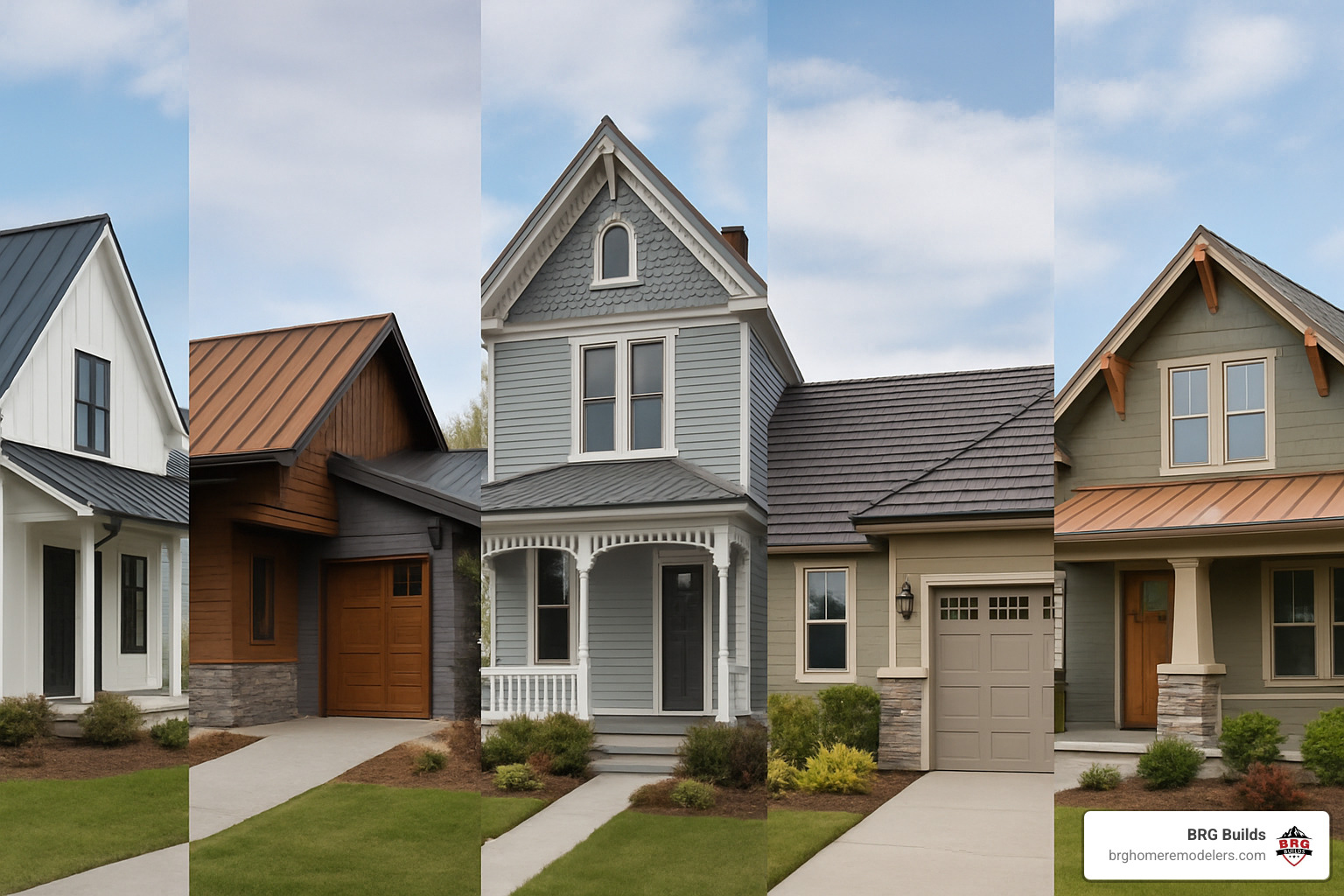
The magic happens when metal roofing improves your home’s character rather than fighting against it. We’ve transformed everything from historic Denver bungalows to cutting-edge mountain retreats.
Color choice affects both your home’s appearance and your energy bills. Dark colors like matte black or charcoal absorb more heat but hide dirt beautifully and create stunning dramatic contrast. Light colors reflect heat for better energy efficiency but show every speck of dust. Cool-roof coatings can make dark colors perform like light ones thermally while keeping that bold look.
Modern farmhouse styles are perfect partners for metal roofing. The clean lines of matte black standing seam complement both the traditional and contemporary elements that define this style.
Mountain contemporary homes practically beg for weathered steel or natural copper finishes. These materials age gracefully in our climate – the copper developing that gorgeous patina over time, the weathered steel maintaining its rustic charm.
Finding the “best residential metal roofing” look for Traditional Homes
Traditional homes often need metal roofing that doesn’t scream “metal.” Today’s metal options can fool even the neighbors. Metal shingles replicate cedar shake, slate, or premium asphalt shingles so convincingly that you get all of metal’s benefits with none of the aesthetic compromise.
Diamond-pattern metal tiles work magic on Tudor or Mediterranean styles where clay tile would be traditional. The metal versions weigh half as much, cost far less to maintain, and laugh at our freeze-thaw cycles that crack ceramic tiles.
HOA approval can be tricky with some metal styles, but stone-coated systems often satisfy the most demanding appearance requirements while delivering metal’s superior performance.
Classic color palettes work best for traditional homes. Charcoal or black roofs create timeless elegance. Forest green roofs complement natural stone or brick beautifully. Copper roofs develop character over time while pairing perfectly with deep green or natural wood accents.
“Best residential metal roofing” Choices for Modern & Rustic Colorado Designs
Contemporary Colorado homes can accept metal’s industrial aesthetic without apology. Matte black standing seam creates breathtaking contrast against light-colored siding while maintaining those clean, minimalist lines.
Weathered steel finishes give you instant patina without waiting decades for natural aging. These finishes are perfect for mountain homes where that weathered appearance feels right at home.
We often suggest starting with accent roofs on porches, dormers, or bay windows. This lets homeowners experience metal roofing’s benefits before committing to the entire roof.
Snow-country colors like deep blues, forest greens, and rich browns complement Colorado’s natural palette while providing excellent fade resistance.
Frequently Asked Questions about Residential Metal Roofing
After 30+ years of installing metal roofs across Colorado, I’ve answered these same questions hundreds of times. Here’s what homeowners really want to know about choosing the best residential metal roofing for their homes.
How long does a metal roof really last?
The honest answer depends on your material choice and installation quality. Steel and aluminum roofs deliver 30-50 years of reliable performance when properly installed and maintained. That’s two to three times longer than asphalt shingles in our Colorado climate.
Premium metals like copper and zinc often outlast the homes they protect. We’ve restored copper roofs over 100 years old that still function perfectly. These materials develop protective patinas that actually strengthen over time, making them true lifetime investments.
The lifespan factors that matter most include material gauge thickness, installation workmanship, and consistent maintenance. In Colorado’s challenging environment – with intense UV, hail storms, temperature swings from -20°F to 100°F, and heavy snow loads – quality metal roofing systems handle what destroys other materials.
We’ve seen properly installed 24-gauge steel roofs perform flawlessly for 40+ years while thin 29-gauge installations show problems within 15 years. The gauge difference costs about $2-3 more per square foot upfront but delivers decades of additional performance.
Can metal roofing be installed over existing shingles?
Yes, and it often makes financial sense when conditions allow. Installing metal roofing over existing shingles saves $2-4 per square foot in tear-off and disposal costs while reducing installation time and eliminating the mess of a complete tear-off.
However, we evaluate every roof individually because some situations require complete removal. Multiple existing layers, damaged decking, or inadequate structural support mean the old roof must come off first. Local building codes also vary – some areas require tear-off regardless of roof condition.
When we can install over existing shingles, there are actually benefits beyond cost savings. The old shingles provide additional insulation and natural sound dampening. We ensure proper ventilation design and use longer fasteners that penetrate through all layers to reach structural decking.
Will hail dents void my metal-roof warranty?
This question comes up constantly in Colorado’s “hail alley,” and the answer has two parts: material warranties and insurance coverage work differently.
Most metal roof material warranties cover perforation (actual holes) but exclude cosmetic damage like minor denting. The roof continues functioning normally even with small dents, so manufacturers don’t consider this a performance failure.
Insurance policies vary significantly on cosmetic damage coverage. Some policies cover appearance-related repairs while others only pay for functional damage. We help homeowners understand their coverage before installation and document roof condition thoroughly.
For maximum hail protection, we recommend thicker gauge materials and standing seam systems over exposed-fastener panels. Stone-coated metal systems earn Class 4 hail ratings – the highest available – and often qualify for insurance discounts.
Conclusion
Choosing the best residential metal roofing comes down to finding that sweet spot where Colorado’s tough climate, your budget reality, and your home’s style all come together beautifully. After helping hundreds of homeowners make this decision, I’ve seen how the right metal roof transforms not just a home’s protection, but the owner’s peace of mind.
Think of it as solving a three-part puzzle. Climate compatibility means picking materials that handle Colorado’s mood swings – from blazing summer sun to golf-ball-sized hail to heavy snow loads. Steel and aluminum handle our conditions like champs for most homes, while copper and zinc offer that lifetime solution.
Budget alignment requires looking beyond that initial sticker shock. Yes, you’ll pay three times more upfront than asphalt shingles. But when you factor in skipping future roof replacements, energy savings, and potential insurance breaks – the math starts looking friendly.
Style integration is where the magic happens. Your roof covers roughly 40% of what people see when they look at your home. Standing seam creates those crisp, modern lines that work beautifully on everything from mountain contemporaries to updated farmhouses. Stone-coated systems give you metal’s toughness wrapped in traditional good looks.
Here’s what I’ve learned after three decades in this business: expert installation matters more than having the fanciest materials. I’ve fixed too many roofs where premium materials failed because someone treated them like regular shingles. Metal roofing has its own rules and tricks that only come with experience.
The beauty of the best residential metal roofing is that it’s truly a one-and-done solution. Install it right, maintain it minimally, and it should outlast everything else on your house. No more dreading storm season or budgeting for the next roof replacement.
At BRG Builds, we’ve spent over 30 years learning Colorado’s weather patterns, architectural styles, and what really works in our unique environment. We guide homeowners through every decision – from picking the right gauge steel to choosing colors that complement your home’s character.
Ready to explore how best residential metal roofing can give your home the protection and curb appeal it deserves? More info about contacting our team to start a conversation about your specific situation. We’ll help you steer the options and create a solution that fits your home, your budget, and your peace of mind perfectly.


