

Why Your Commercial Roof is a Critical Business Asset
Commercial roof inspection services are professional evaluations that assess the condition and safety of your property’s roofing system. These comprehensive assessments help identify potential issues before they escalate into costly disasters, protecting not just your building, but your entire business operation.
Your commercial roof is a vital asset. While most roofs have a life expectancy of 20 to 50 years, this is only achievable with proper maintenance. The National Roofing Contractors Association recommends inspections at least twice a year (spring and fall), plus after any severe weather. A typical inspection takes just one to two hours but can save you from expensive repairs or a full replacement down the road.
I’m Benny Izquierdo, and with over 100 successful roofing projects in Colorado, I’ve seen how proactive commercial roof inspection services are the most cost-effective way to maintain a roof’s integrity and ensure business continuity.
Keeping your commercial property watertight is essential. Regular inspections provide the data needed for informed budget planning, simplifying potential insurance claims and ensuring you comply with warranty terms. For more expert insights, explore our Expert Tips on Roofing and Remodeling.
The High Stakes of Neglect: Common Problems Uncovered
Ignoring your roof can lead to significant problems. Severe weather, debris, and UV exposure take a toll, causing issues that a professional inspection can uncover.
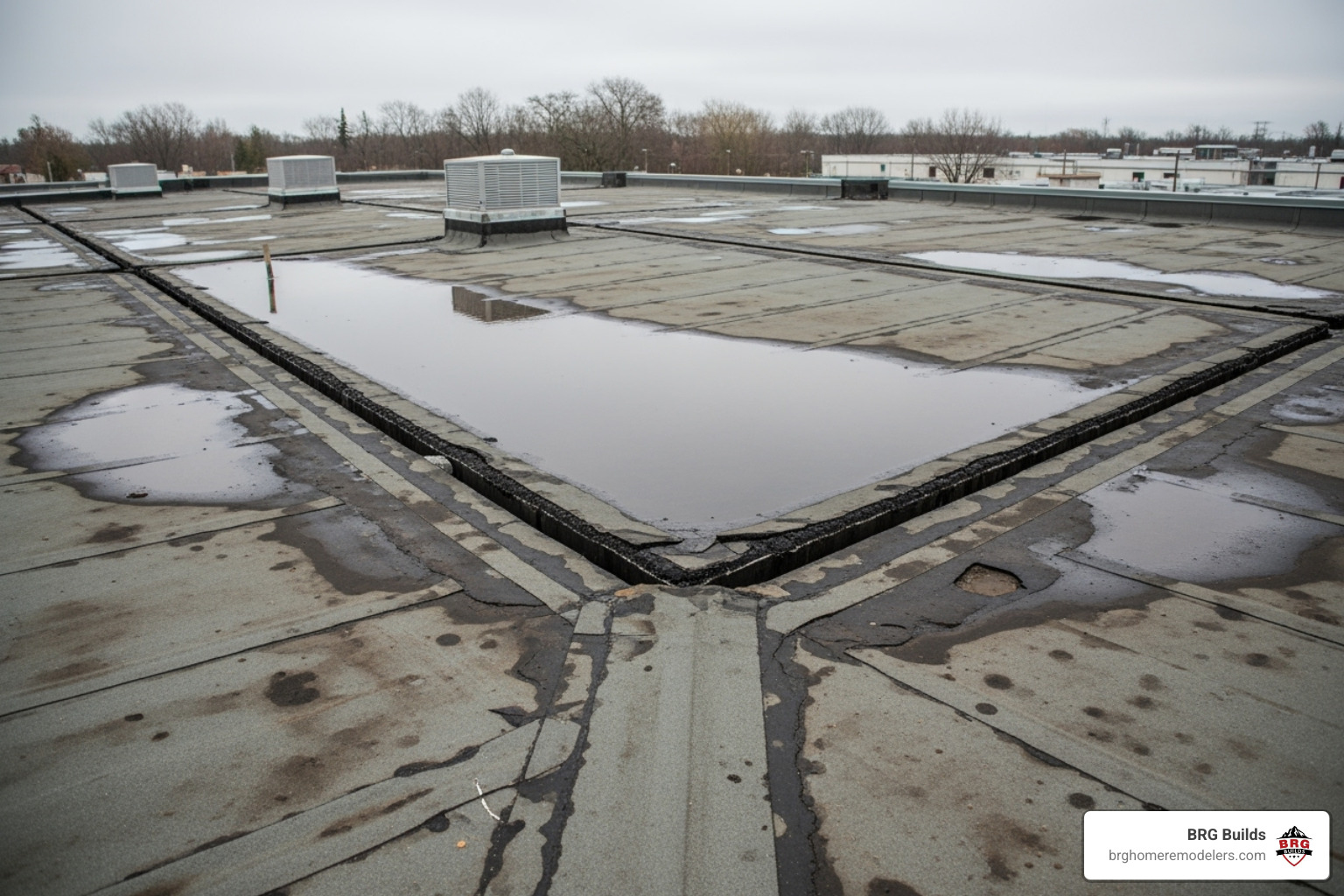
Common problems we find include:
- Leaks and Water Damage: The most obvious sign, causing damage to inventory, equipment, and structural integrity.
- Saturated Insulation: Undetectable without special tools, this reduces R-value, increases energy costs, and can lead to mold.
- Membrane Damage: Punctures, cracks, and tears from debris, foot traffic, or sun exposure.
- Clogged Drainage: Debris in drains or gutters leads to ponding water, which strains the structure and accelerates aging.
- Flashing Failure: The seals around roof penetrations and edges are common failure points.
- Poor Installation: Initial installation errors can cause premature failures.
The Proactive Advantage: Key Benefits of Regular Commercial Roof Inspection Services
Investing in regular commercial roof inspection services offers significant long-term benefits:
- Extending Roof Lifespan: Catching minor issues early can significantly prolong your roof’s useful life.
- Preventing Costly Repairs: Small, inexpensive fixes prevent major structural damage later.
- Improving Energy Efficiency: A well-maintained roof and intact insulation lower utility bills.
- Ensuring Safety: Inspections identify structural hazards, keeping your property safe and OSHA compliant.
- Documented Roof History: A detailed history is invaluable for insurance claims, warranties, and budgeting.
- Maximizing Property Value: A well-maintained roof is a significant asset that increases your property’s value.
The Anatomy of a Professional Commercial Roof Inspection
A professional commercial roof inspection service is a meticulous evaluation designed to understand your roof’s health and spot potential issues early. With thousands of different roofing systems available, this process demands true expertise.
Our inspectors use a comprehensive multi-point checklist, ensuring every critical component is examined. We pay close attention to Colorado’s local building codes and unique weather challenges, like heavy hail and snow. We also identify all OSHA safety requirements to ensure the inspection is performed safely and all recommendations are made with compliance in mind. Every finding is documented to give you a clear picture of your roof’s condition.
The Comprehensive Visual Checklist: What Inspectors Look For
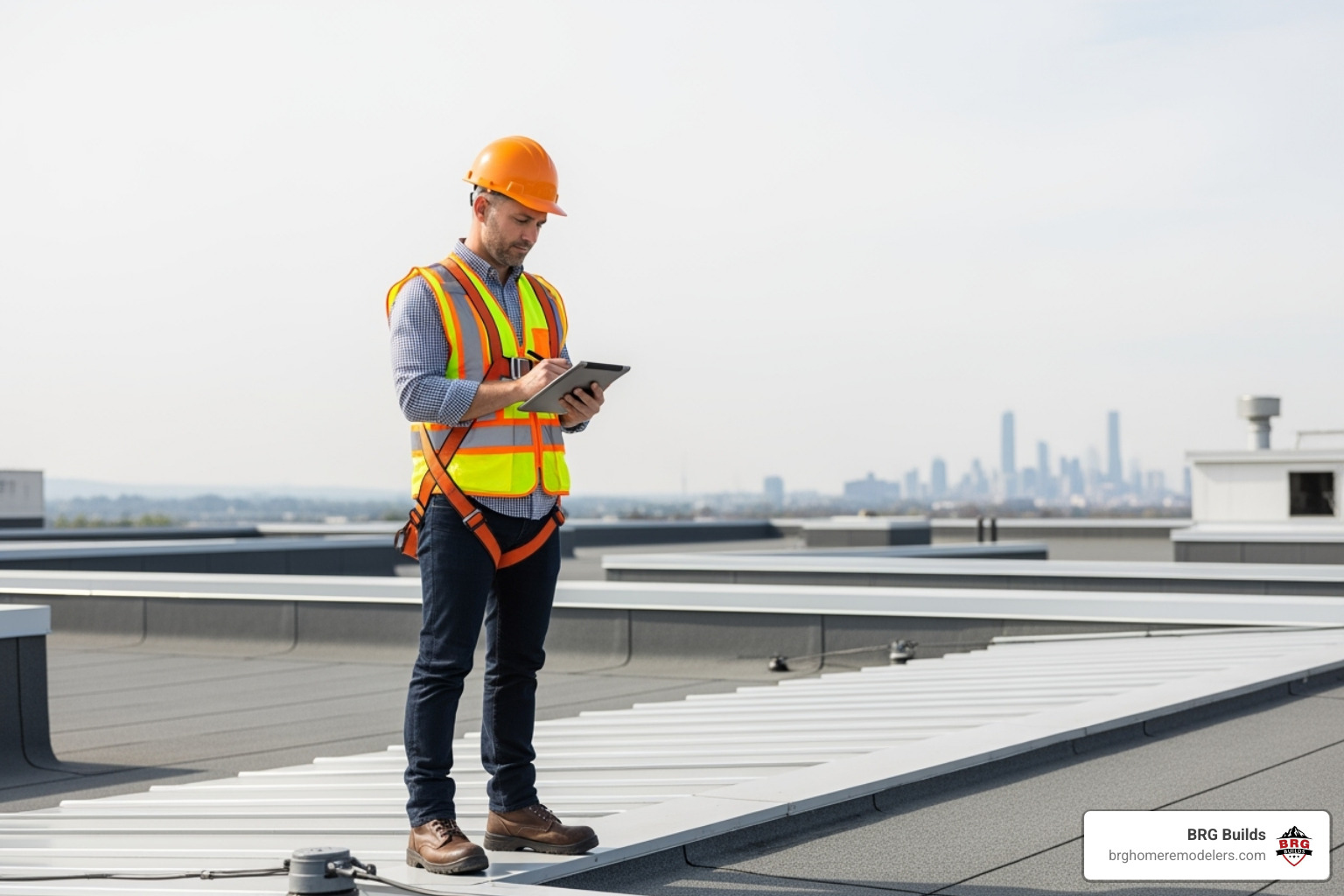
During a visual inspection, our certified inspectors examine both the exterior and interior of your building for clues about your roof’s health. We look for:
- Roof Surface Condition: Blistering, cracking, punctures, ponding water, rust, or biological growth.
- Seams and Fasteners: We check for any separation, lifting, or corrosion.
- Flashing and Penetrations: We inspect the seals around vents, skylights, and HVAC units, as these are common leak points.
- Drainage Systems: Gutters, downspouts, and drains are checked for blockages to ensure proper water flow.
- Interior Ceilings and Walls: We look for water stains or mold, which are tell-tale signs of a roof problem.
Beyond the Naked Eye: Advanced Inspection Technologies
Modern commercial roof inspection services use advanced technology to uncover hidden issues. These non-invasive methods provide a more accurate picture of your roof’s condition.
- Infrared Thermography: Thermal imaging cameras detect temperature variations that indicate trapped moisture or saturated insulation beneath the roof membrane. It’s like having x-ray vision for your roof.
- Drone Inspections: Drones equipped with high-resolution cameras allow us to safely and quickly inspect large or hard-to-reach areas, providing excellent aerial imagery.
- Moisture Detection and Core Samples: We use tools like impedance meters to pinpoint trapped moisture. When necessary, we may take a small core sample to physically examine the roof layers and decking condition. This invasive test is always carefully repaired. You can learn more in this Video: What are core samples?.
By combining these technologies, we can perform precise leak analysis and provide expert solutions for any roofing challenge.
Decoding the Inspection: From On-Site Visit to Actionable Report
After a thorough check of your commercial roof, we translate our findings into clear, actionable advice. The goal of every commercial roof inspection service is to give you a complete understanding of your roof’s condition and guide you toward the best course of action.
The Inspection Process: What to Expect
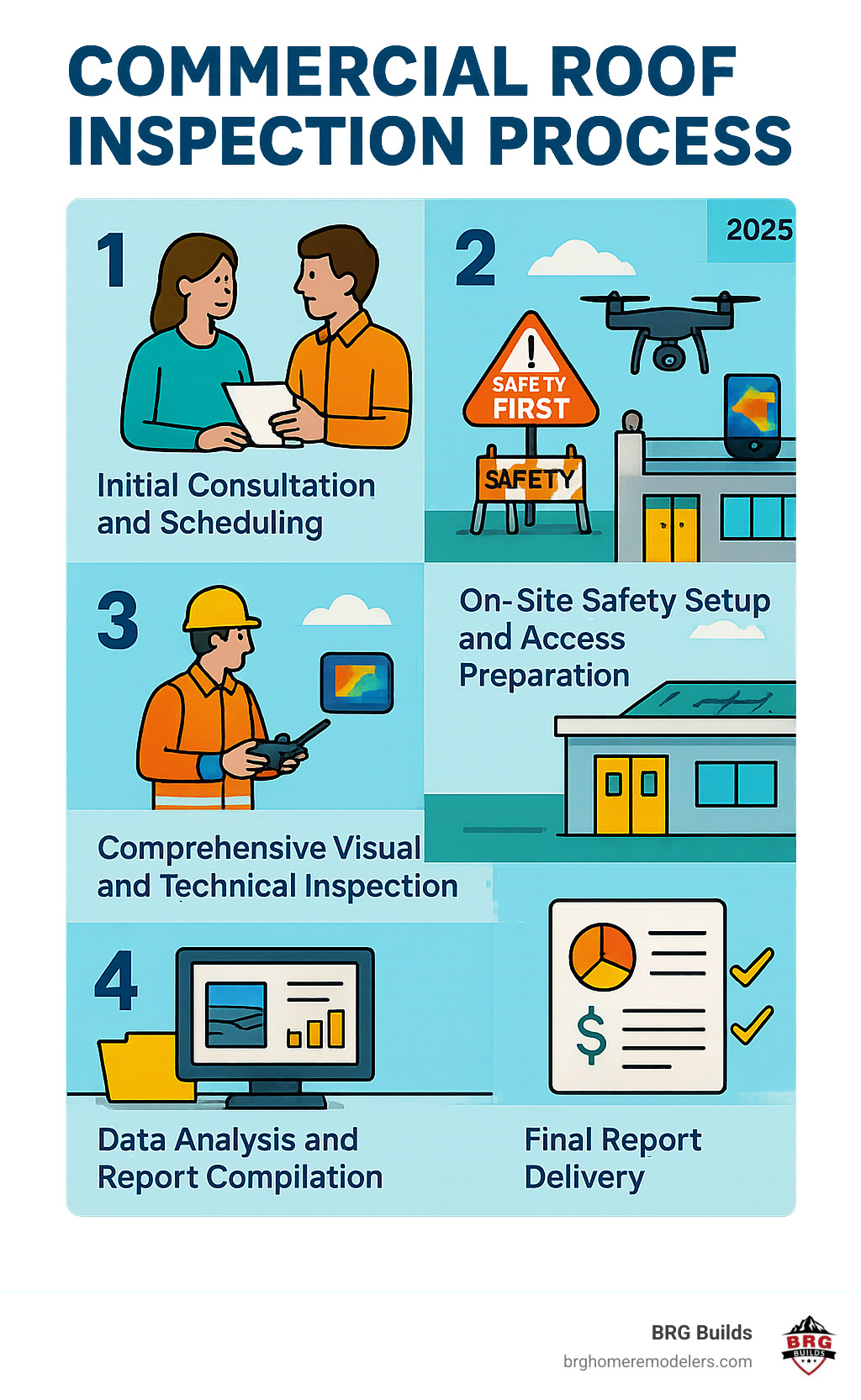
Here’s a step-by-step look at what happens when you schedule an inspection with us:
- Initial Consultation: We start with a friendly chat to understand your specific concerns, such as known leaks or other issues.
- On-Site Inspection: Our certified inspectors arrive and follow strict OSHA safety protocols. They systematically work through a multi-point checklist, using their eyes and advanced tools like drones or thermal imaging. For a typical 20,000-square-foot roof, this takes about one to two hours.
- Post-Inspection Briefing: Before leaving, our inspectors will provide a concise summary of their key findings and outline the next steps.
Understanding Your Commercial Roof Inspection Report
Within 24-48 hours, you’ll receive your commercial roof inspection service report. This easy-to-read document is your personalized roadmap for managing your roof.
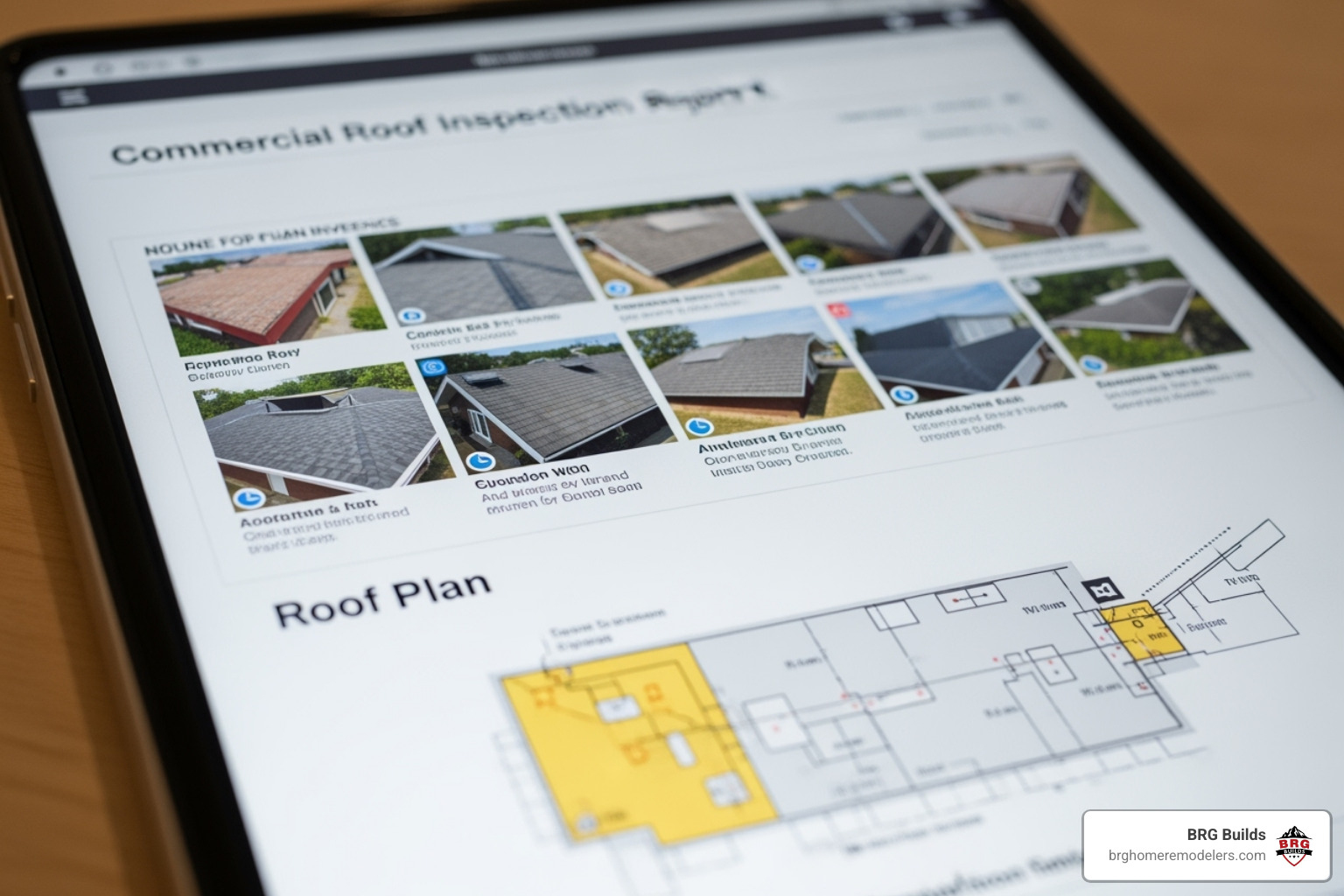
Inside, you’ll find:
- Detailed Findings & Photographic Evidence: We clearly outline all observed conditions, with high-resolution, annotated photos so you can see exactly what we see.
- Condition Assessment: You’ll get a professional assessment of your roof’s overall health and its estimated remaining useful life.
- Recommended Actions & Cost Estimates: We provide specific, actionable solutions for each issue. We’ll clearly outline the options and costs for a simple repair, a life-extending restoration, or a full replacement if the roof has reached the end of its functional life.
This complete picture empowers you to make smart, informed decisions about your commercial roof.
Making the Right Choice for Your Commercial Roof Inspection Services
Choosing the right professional for your commercial roof inspection services is a critical decision that impacts the longevity of your roof and the protection of your business. You need a trustworthy partner who understands the unique needs of commercial roofs in Colorado.
When selecting a professional, consider their qualifications, experience, insurance coverage, and local reputation. To learn more about our credentials, we invite you to explore Our Roofing Services.
Independent Inspector vs. Full-Service Roofing Contractor: A Comparison
When seeking commercial roof inspection services, you’ll encounter two main types of professionals. Understanding the difference is key to making the right choice.
| Factor | Independent Inspector | Full-Service Roofing Contractor |
|---|---|---|
| Services Offered | Inspections, condition reports, forensic analysis, consulting. They do NOT perform repairs or installations. | Inspections (often free), repairs, maintenance, full replacements, new installations. |
| Potential for Bias | Very Low. Their only goal is to give you an unbiased, honest assessment. They don’t make money from fixing things. | Higher. They might offer “free” inspections hoping to get the paid repair or replacement work. |
| Repair Capabilities | None. They recommend solutions but don’t do the actual work. | Yes. They can offer a complete, end-to-end solution, from checking your roof to finishing the repairs or replacements. |
| Cost Structure | Usually charges a fee just for the inspection and report. | Might offer free initial inspections, or apply the inspection fee towards future work. |
| Relationship | Acts as your independent advisor, like your “watchdog” looking out for you. | Acts as a service provider, offering solutions for what they find. |
| Conflict of Interest | None. Their advice is purely for your benefit. | There’s a potential conflict if they’re checking out problems they could then get paid to fix. |
For situations requiring a completely unbiased analysis—like due diligence or legal disputes—an independent inspector is invaluable. However, for a straightforward, turnkey solution, a reputable full-service roofing contractor can handle everything from inspection to project completion. The key is choosing a contractor with a solid reputation.
What to Look for When Hiring a Professional for commercial roof inspection services
Whether you choose an independent inspector or a full-service contractor, verify these crucial qualifications to ensure you’re hiring a legitimate and trustworthy professional for your commercial roof inspection services.
- Proof of Insurance: Always confirm they have both General Liability and Workman’s Compensation insurance to protect you and your property.
- Licensing: Check that their contractor’s license is current and valid for your area.
- Manufacturer Certifications: Certifications from major brands like GAF or Carlisle indicate that a contractor has met high standards for training and quality.
- Local Reputation and Experience: Look for a company with a long-standing, positive track record in your community. Check BBB ratings and customer reviews. BRG Builds has over 30 years of experience serving Colorado.
- Knowledge of Colorado Climate: Your inspector must understand how our state’s intense UV rays, hailstorms, and heavy snow affect roofing systems and be able to recommend appropriate solutions.
Frequently Asked Questions About Commercial Roof Inspections
It’s normal to have questions about commercial roof inspection services. Your roof is a major investment, and we’re happy to provide answers to some common inquiries.
How often should a commercial roof be inspected?
We strongly recommend having your roof inspected at a minimum, twice a year, ideally in the spring and fall. This prepares your roof for the stresses of summer heat and winter cold. Additionally, it is critical to schedule an inspection after any severe weather event, such as a hailstorm, heavy snow, or high winds. Regular inspections are the foundation of any effective preventative maintenance plan.
How much does a commercial roof inspection cost?
The cost of a commercial roof inspection service varies depending on several factors, including the roof’s size, complexity, and the type of inspection required. A basic visual check will cost less than a comprehensive assessment using advanced technology like infrared thermography.
Some full-service contractors may offer an initial assessment for free, while independent inspectors typically charge a fee, which can start around $359. In some cases, an inspection fee may be credited toward the cost of repairs. Always get a clear, upfront quote custom to your property.
What happens after the inspection finds problems?
Finding problems is an opportunity to address issues early, saving you money and hassle later. After the inspection, you will:
- Review the Report: You’ll receive a detailed document with photos and diagrams showing the location and severity of any issues.
- Discuss Recommendations: The inspector will explain the findings and walk you through your options.
- Prioritize and Schedule Repairs: Based on the report, you can address critical issues immediately and schedule routine maintenance for smaller items. Acting promptly on repairs is the best way to prevent a small problem from becoming a major disaster.
Conclusion: Safeguard Your Investment with Proactive Care
Your commercial roof is a critical asset, a silent guardian working 24/7 to protect your inventory, equipment, and team. A proactive approach with regular commercial roof inspection services is not just a good idea—it’s a smart business strategy for managing your property and finances.
We believe in a simple motto: “Inspect to Protect!” By identifying small issues early, you can prevent them from becoming large, expensive disasters. This extends the life of your roof, improves your building’s energy efficiency, and ensures a safe environment for everyone inside.
For over 30 years, BRG Builds has served Denver and the surrounding Colorado suburbs with high-quality craftsmanship and exceptional service. We are local experts who understand our region’s unique climate and building styles. We want to be your trusted partner in keeping your commercial property safe and sound.
Don’t wait for a small drip to become a major headache. Let us help you safeguard your valuable investment. Reach out today to schedule your comprehensive roof inspection. We’re here to help!


