

Why Colorado’s Unique Climate Demands Expert Commercial Roofing Solutions
Commercial roofing colorado requires specialized expertise to handle the state’s extreme weather conditions. Colorado’s combination of intense UV exposure, severe hailstorms, heavy snow loads, and dramatic temperature swings creates unique challenges for commercial building owners.
Top Commercial Roofing Services in Colorado:
- Single-ply membrane systems (TPO, EPDM, PVC) – 15-30 year warranties
- Metal roofing systems – Superior hail resistance and longevity
- Modified bitumen and built-up roofing – High durability for heavy foot traffic
- Roof restoration and coatings – Extend life by 4-5 years at fraction of replacement cost
- Emergency leak repair – Critical for preventing business downtime
- Bi-annual inspections – Starting at $250 for properties under 1,000 sq ft
As one facility services supervisor noted: “CRW’s collaboration, professionalism and stewardship to their clients is best.”
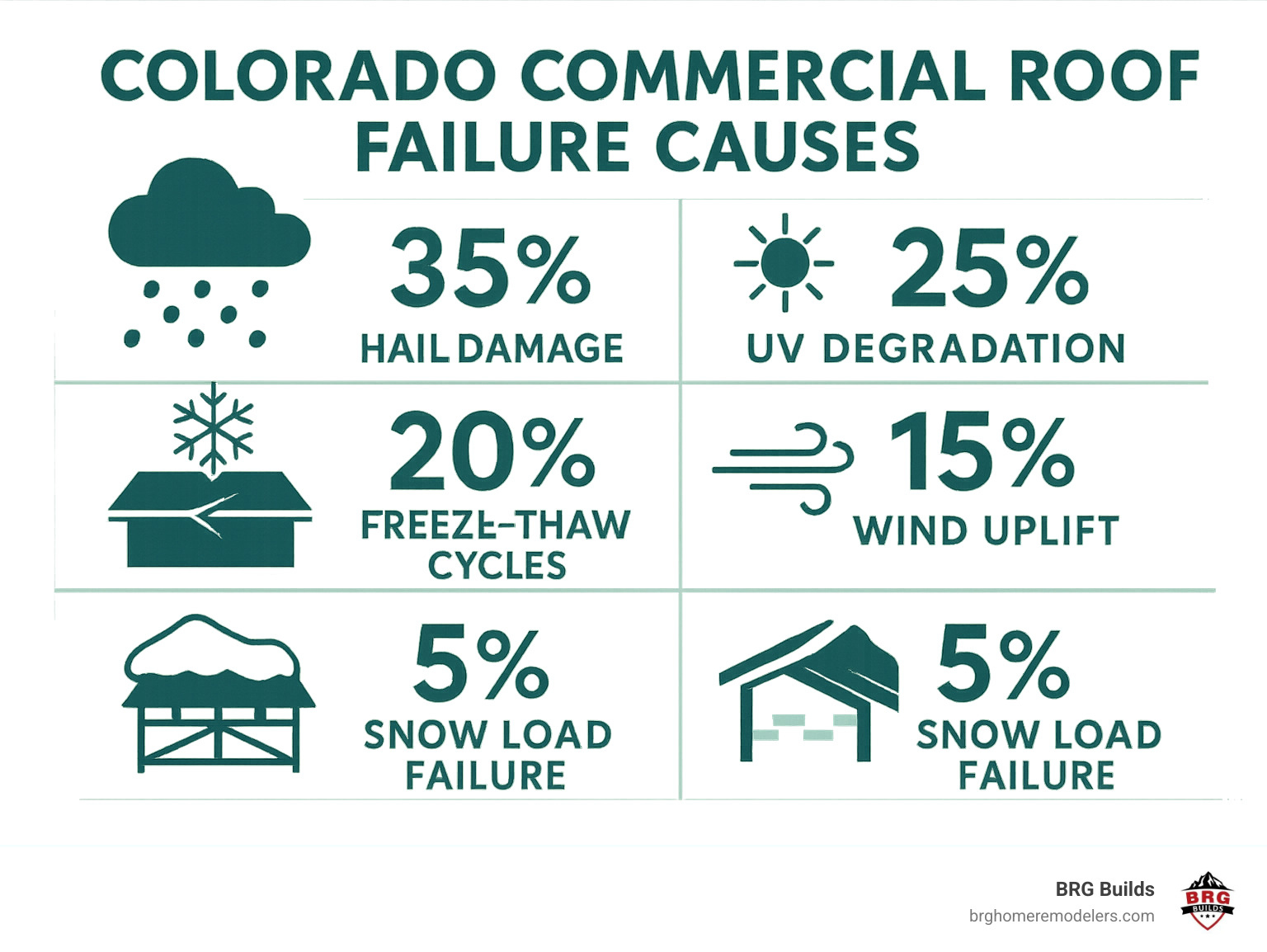
Colorado’s commercial roofs face relentless hailstorms that can destroy standard roofing materials in minutes. The state’s high altitude means intense UV radiation that degrades roofing membranes faster than in other regions. Winter brings massive snow loads that can collapse inadequately designed systems.
The stakes are high. A failing commercial roof doesn’t just mean repair costs – it means business interruption, inventory damage, and potential liability issues.
I’m Benny Izquierdo, and I’ve completed over 100 successful roofing projects across Colorado, working closely with property managers and business owners to steer commercial roofing colorado challenges.
Why This Guide Matters
When your commercial roof fails, the ripple effects are immediate and costly. We’ve seen businesses lose thousands in inventory to water damage, face regulatory shutdowns due to safety concerns, and struggle with employee productivity in compromised work environments.
The pain points we consistently hear from Colorado business owners include:
- Unexpected business downtime during emergency repairs
- Skyrocketing energy costs from poor insulation and air leaks
- Insurance claim headaches after hail damage
- Difficulty finding qualified contractors who understand Colorado’s unique requirements
Smart preventative maintenance and choosing the right roofing system upfront can save you 30-50% compared to emergency replacements.
Commercial Roofing Colorado: System Options & Climate Challenges
Colorado’s weather doesn’t play nice with roofs. We’re talking about temperature swings that can hit 60+ degrees in a single day, hailstones the size of golf balls, and UV exposure that’s 25% more intense than at sea level.
After three decades of battling Colorado’s elements, I’ve learned that commercial roofing colorado success comes down to understanding how each material responds to our unique climate challenges.
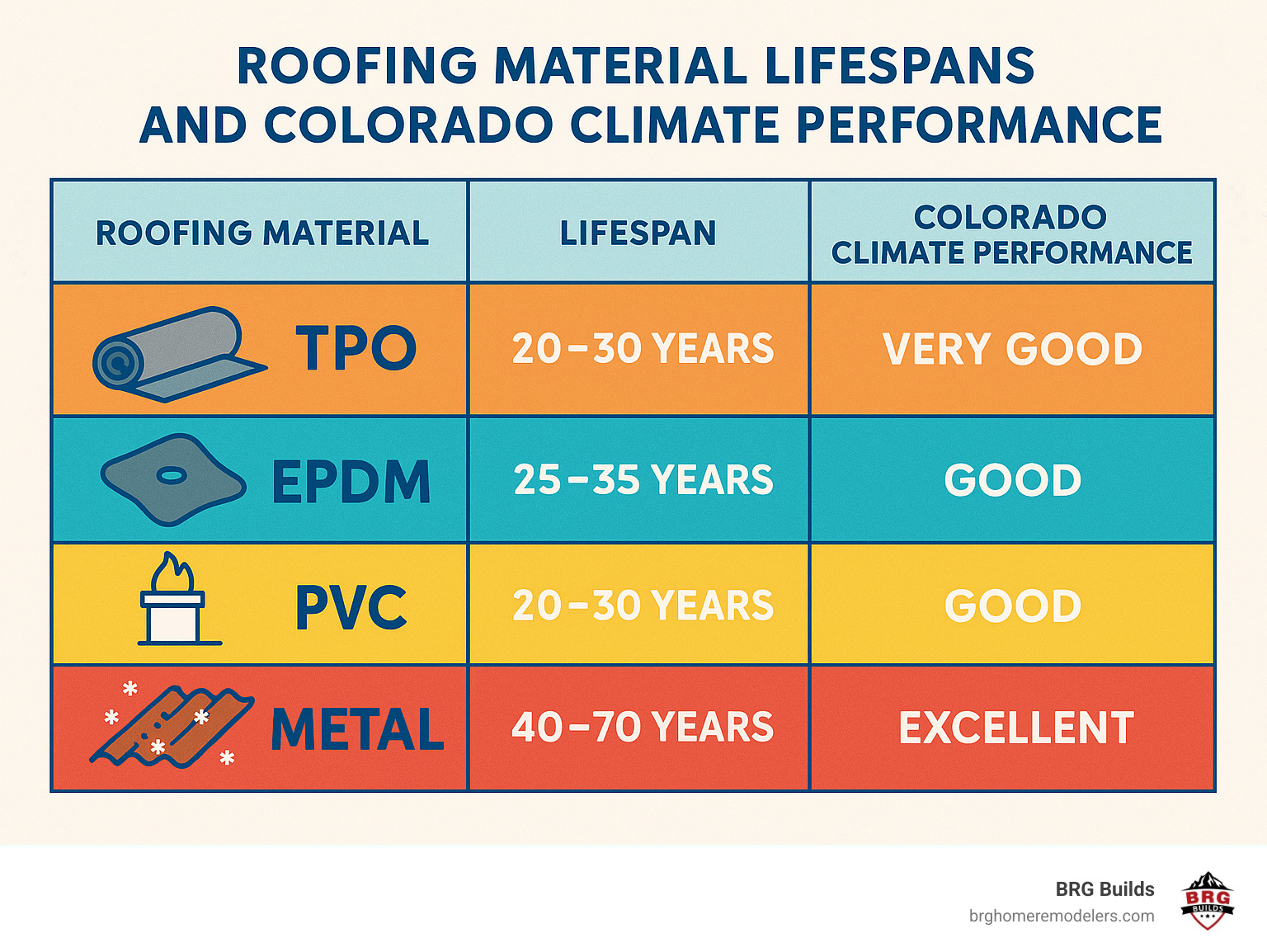
Single-ply membrane systems have become the go-to choice for most commercial buildings here. TPO (Thermoplastic Polyolefin) has earned its reputation as the workhorse of Colorado commercial roofing. Those heat-welded seams create watertight barriers that handle our freeze-thaw cycles beautifully.
EPDM (Ethylene Propylene Diene Monomer) rubber membranes stay flexible when temperatures plummet to -20°F. The challenge with EPDM lies in the seam connections – proper adhesive curing is critical during our short installation windows.
PVC membranes shine when you need chemical resistance and bulletproof seams. Restaurant owners love them because kitchen grease doesn’t stand a chance against properly welded PVC. Plus, that bright white surface can slash your cooling costs by up to 20%.
Metal roofing systems are the tanks of the roofing world. I’ve witnessed standing seam metal roofs take direct hits from baseball-sized hail that turned neighboring membrane roofs into Swiss cheese, and the metal barely showed a dent.
Scientific research on single-ply membranes continues to drive improvements in material formulations, helping manufacturers create products that better withstand Colorado’s demanding conditions.
Most Common Systems in Commercial Roofing Colorado
TPO dominance is real – about 60% of our commercial installations now feature TPO membranes. Property managers appreciate the sweet spot TPO hits between performance, cost, and warranty coverage.
EPDM popularity remains strong, especially for smaller buildings under 10,000 square feet. Building owners who’ve done their homework know EPDM’s 30+ year track record speaks volumes.
Metal retrofits are having a moment, particularly in hail-prone areas. After watching membrane roofs get shredded by severe storms, more property owners are making the jump to premium metal systems.
How Colorado’s Climate Shapes Commercial Roofing Colorado Decisions
Freeze-thaw cycles happen constantly from October through April, creating relentless expansion and contraction that finds every weak point in poorly designed systems.
100-mph winds during spring storm season demand respect. We design every system with improved wind uplift resistance, often exceeding code requirements.
Hailstones reaching 4+ inches in diameter are unfortunately common along the Front Range corridor. This reality has shifted our recommendations toward impact-resistant systems for high-risk areas.
Pros & Cons of Each Material
TPO systems bring heat-welded seams that create virtually indestructible connections, excellent UV resistance, and energy-efficient white surfaces. The downsides include susceptibility to punctures and the need for skilled installers.
EPDM systems excel with rubber flexibility that stays supple even when temperatures drop below zero, plus a proven track record spanning decades. The trade-offs include heat absorption from dark surfaces and adhesive seams requiring more attention.
Metal roofing delivers best hail resistance, lifespans exceeding 40 years, complete recyclability, and excellent snow-shedding capabilities. The considerations include higher initial investment and thermal movement requiring proper design.
Inspection, Maintenance & Restoration Roadmap
Think of your commercial roofing colorado system like your car – regular check-ups cost a fraction of what you’d pay for a complete breakdown. We’ve seen too many business owners learn this lesson the hard way when a small leak turns into a $50,000 emergency replacement.
Colorado’s weather doesn’t give roofs a break. Between spring hailstorms, summer UV bombardment, and winter freeze-thaw cycles, your roof takes a beating year-round. That’s why we recommend bi-annual checkups – once in spring after winter’s damage and again in fall before the next snow season.
A well-maintained commercial roof can last 25-30 years, while a neglected one might fail in just 10-15 years. Spending $2,000 annually on maintenance beats writing a $200,000 replacement check.
Preventive care isn’t just about fixing problems – it’s about catching them before they become disasters. Roof coatings and restoration services can add 4-5 years to your roof’s life at roughly 20% of replacement cost.
More info about Roofing services
Step-by-Step Commercial Roof Inspection
Our inspection process starts with a thorough visual survey where we walk every inch of your roof. We’re looking for subtle signs that most people miss – slight membrane discoloration that hints at moisture problems, or small cracks that will become big leaks next winter.
Membrane condition tells us everything about how your roof is aging. Blisters, shrinkage, and surface crazing all have different meanings and urgency levels.
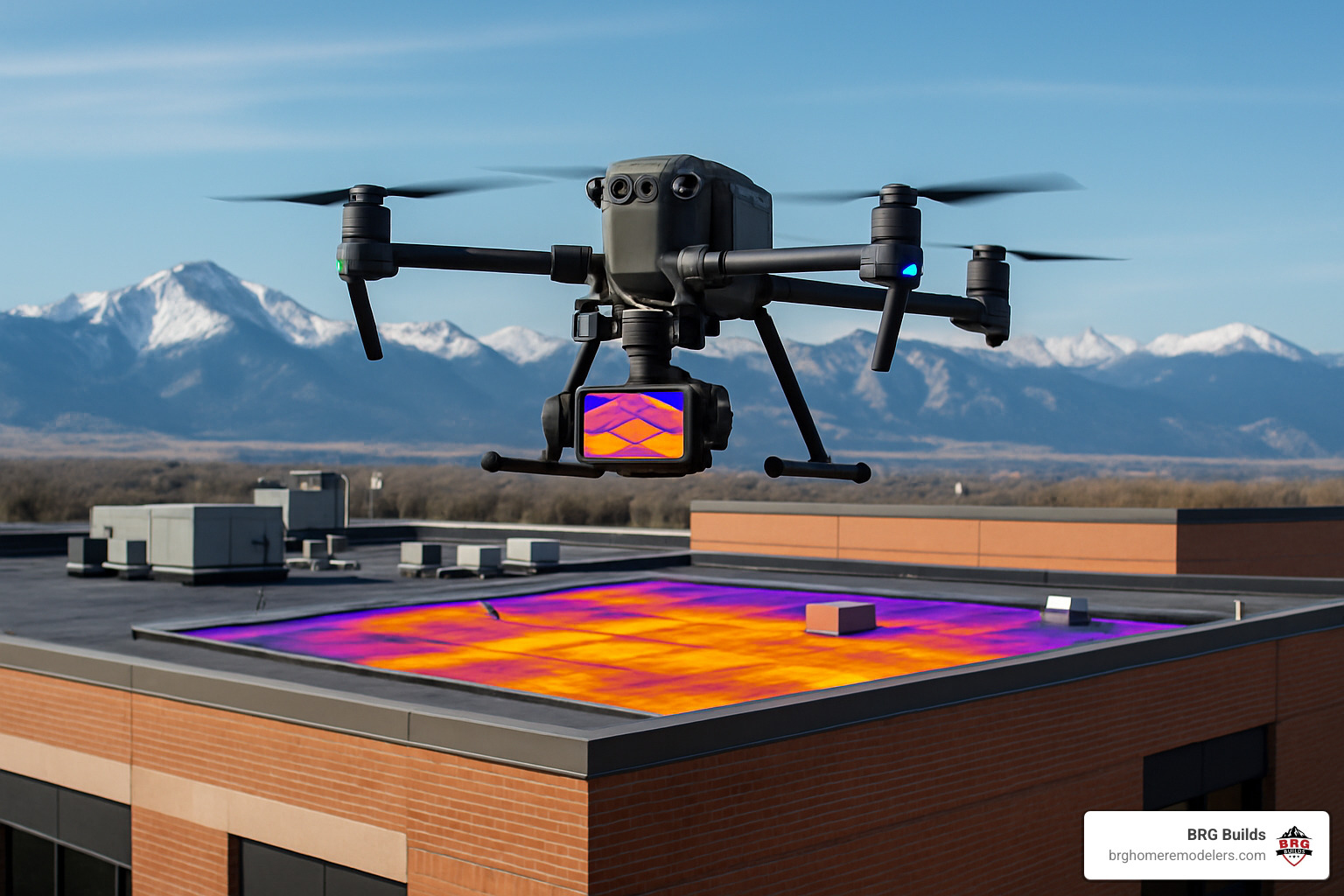
Moisture scanning with infrared technology is like having X-ray vision for your roof. Wet insulation shows up as different temperature zones, revealing problems that won’t be visible until they’ve caused serious damage.
Extending Roof Life Through Maintenance Programs
Clean drains might seem obvious, but Colorado’s cottonwood season and autumn leaves can clog drainage systems faster than you’d expect. We’ve seen ponding water destroy $100,000 roofs because of $50 worth of debris.
Seal penetrations require annual attention because Colorado’s temperature swings cause constant expansion and contraction. Those tiny cracks around HVAC units are where most leaks start.
Snow removal isn’t always necessary, but knowing when it is can prevent catastrophic failures. We help clients understand their roof’s load limits and recognize dangerous snow accumulation patterns.
When to Restore vs Replace
The cost threshold we use is simple: if restoration costs more than 50% of replacement, it’s usually time for a new roof. But the math isn’t always straightforward because restoration can dramatically improve energy efficiency.
Substrate condition is the real decision-maker. If your insulation is wet or your decking is compromised, no amount of surface restoration will fix the underlying problems.
Colorado’s intense sun makes fluid-applied membranes and reflective coatings particularly effective restoration options. These systems can reduce cooling costs by 15-20% while extending roof life significantly.
Scientific research on cool-roof coatings
Hiring the Right Colorado Commercial Roofing Contractor
Finding the right contractor for your commercial roofing colorado project can feel overwhelming. After three decades in this business, I’ve seen what separates excellent contractors from those who cut corners and leave clients dealing with problems for years.
The stakes are simply too high to gamble with inexperienced contractors. A poorly installed commercial roof doesn’t just leak – it can shut down your business, damage expensive equipment, and create liability nightmares.
Your contractor’s credentials tell the whole story. We maintain our Colorado contractor’s license, carry comprehensive workers’ compensation and liability insurance, and hold manufacturer certifications from every major roofing supplier we work with.
Local code expertise makes all the difference. Colorado’s building codes vary dramatically between Denver, Boulder, and smaller mountain communities. High-altitude requirements are completely different from sea-level standards.
Safety records should be non-negotiable. Commercial roofing is dangerous work, and contractors with poor safety practices put everyone at risk – including your liability exposure.
Insurance claim assistance has saved our clients thousands of dollars. Colorado’s hail damage is inevitable, and knowing how to document damage properly can mean the difference between full coverage and costly out-of-pocket expenses.
Vetting Checklist
Before you sign any contract, take time to verify the basics that protect your investment.
License and insurance verification should be your first step. We’re happy to provide current documentation of our Colorado contractor’s license, general liability coverage exceeding $1 million, workers’ compensation insurance, and project-appropriate bonding.
Project portfolios reveal real experience. Ask to see recent commercial projects in Colorado, specifically buildings similar to yours. We maintain detailed photo documentation of our completed installations.
Warranty terms vary dramatically between contractors. Look for labor warranties of at least two years, material warranty coverage spanning 15-30 years, and warranties that transfer to new building owners.
Understanding Warranties & Guarantees
Labor warranties cover installation defects and typically run anywhere from two to ten years. Longer labor warranties signal contractor confidence in their workmanship.
Material warranties from manufacturers range from 15-30 years for single-ply systems and often include specific performance guarantees for wind uplift and hail resistance.
Warranty transferability adds real value if you ever sell your building. Many manufacturer warranties transfer to new owners for a small fee.
Navigating Insurance Claims
Colorado’s frequent hail damage makes insurance claim expertise incredibly valuable for commercial property owners.
Proper hail documentation requires specific photographic techniques and measurement standards that insurance adjusters recognize. We use standardized documentation forms and know exactly what evidence adjusters need.
Claim deadlines are stricter than many people realize – typically one to two years from the damage date depending on your policy. Don’t wait to document damage after major storm events.
More info about BRG expert tips
Emerging Trends & Sustainable Solutions
The world of commercial roofing colorado is changing fast, and it’s exciting to see where things are headed. After three decades in this business, I’ve never seen such rapid innovation in roofing technology and sustainability practices.
Solar-ready roofs aren’t just a nice-to-have anymore – they’re becoming the standard. We’re now designing structural support and electrical pathways right into the initial installation. This forward-thinking approach saves our clients thousands when they’re ready to add solar panels later.
Fluid-applied membranes are game-changers for complex roof shapes. These liquid systems flow into every nook and cranny, creating a seamless barrier that traditional rolled membranes simply can’t match.
The science behind reflective coatings is fascinating. These bright white and light-colored surfaces can bounce back up to 85% of Colorado’s intense solar radiation. Compare that to a traditional dark roof that absorbs most of that heat, and you’re looking at cooling cost reductions of 15-25%.
Green roofs are still pretty rare in Colorado, but we’re seeing more interest from environmentally conscious building owners. They provide natural insulation, manage stormwater runoff, and help combat urban heat islands.
Here’s something that’s become non-negotiable in our installations: hardboard underlayment for impact protection. Colorado’s hailstorms are legendary, and this extra layer of protection has saved countless roofs from total destruction.
Energy Efficiency & LEED Considerations
Energy efficiency has become a major driver in commercial roofing colorado decisions. Colorado’s wild temperature swings make energy-efficient roofing systems incredibly valuable.
R-value upgrades through improved insulation can slash your heating and cooling costs by 20-30%. When you’re dealing with temperature swings of 60+ degrees in a single day, high-performance insulation is essential.
The smartest time for insulation add-ons is during a planned roof replacement. We can upgrade your building’s thermal performance for about 60% less than doing it as a separate project.
Tax incentives and utility rebates can cover 20-40% of premium system costs. We stay on top of these programs and help our clients steer the paperwork.
Technology Spotlight
The technology revolution in commercial roofing is mind-blowing. Thermal drones can scan an entire roof in minutes, spotting wet insulation and energy leaks that would take hours to find with traditional methods.
Web portals have transformed how building managers handle roof maintenance. Instead of digging through filing cabinets for warranty information, everything’s available online.
Predictive analytics might sound like science fiction, but it’s becoming reality. By analyzing weather patterns, building performance data, and maintenance history, we can often predict potential problems before they cause expensive damage.
Frequently Asked Questions about Commercial Roofing Colorado
How long will my commercial roof last in Colorado?
The honest answer? It depends on what you choose and how well you take care of it. Commercial roofing colorado systems face some of the toughest conditions in the country, but with smart choices, you can get excellent longevity.
Metal roofing systems are the marathon runners of the roofing world here in Colorado. We regularly see them pushing past 30 years, and some of our oldest installations are still going strong after four decades.
Single-ply membranes like TPO and EPDM typically give you 20-25 years of solid service when properly maintained. The key word there is “maintained” – these systems reward attention with extended life.
Modified bitumen and built-up systems usually land in the 15-20 year range, though we’ve seen some well-cared-for installations reach 25 years.
Here’s the thing that makes the biggest difference: regular maintenance can add 4-5 years to any system’s life. We’ve watched well-maintained roofs outlast their warranties by decades, while neglected ones fail at half their expected lifespan.
What are the early warning signs my roof needs attention?
Your roof usually whispers before it screams. Learning to listen to those whispers can save you thousands in emergency repairs.
Interior water stains are the most obvious red flag, but don’t wait for dripping water. Those brown spots on your ceiling tiles mean water has already found its way inside.
Ponding water that sticks around more than 48 hours after a storm is trouble brewing. Colorado’s intense sun and freeze-thaw cycles turn standing water into a roof’s worst enemy.
Membrane shrinkage shows up as pulling away from edges, penetrations, or parapet walls. This is especially common after our brutal winter-to-summer temperature swings.
Blisters or bubbles in your roof surface indicate trapped moisture or air beneath the membrane. They start small but grow larger over time, eventually rupturing and creating leak points.
Rising energy bills often signal roof problems before visible damage appears. If your heating or cooling costs are creeping up without explanation, your roof might be letting conditioned air escape.
How much does a full commercial roof replacement cost on average?
Let’s talk real numbers. Commercial roofing colorado replacement costs vary widely, but here’s what we typically see:
Single-ply systems (TPO, EPDM, PVC) generally run $8-15 per square foot. These are your most popular choices because they balance performance with budget-friendly pricing.
Modified bitumen systems land in the $12-20 per square foot range. They cost more upfront but handle heavy foot traffic better than single-ply options.
Metal roofing systems command $15-25 per square foot, but remember – they often last twice as long as other materials and provide superior hail protection.
Your total project cost depends on factors that can swing the budget significantly:
Building complexity makes a huge difference. A simple rectangular warehouse costs far less per square foot than a building with multiple levels and dozens of rooftop units.
Insulation upgrades can add $2-5 per square foot but often pay for themselves through energy savings.
Access challenges drive up labor costs. If we need cranes or special equipment to reach your roof, that affects pricing.
We always provide detailed estimates that break down every cost component. No surprises, no hidden fees – just honest pricing that helps you make informed decisions.
Conclusion
Your commercial roofing colorado investment deserves more than a quick fix – it needs a long-term strategy that protects your business for decades to come. Colorado’s wild weather isn’t getting any milder, and the roofing decisions you make today will either save you money or cost you dearly down the road.
Think of your roof as more than just protection from the elements. It’s a critical business asset that affects everything from your energy bills to your employees’ comfort. Smart building owners are choosing systems that can grow with their needs – whether that means solar integration, energy efficiency upgrades, or staying ahead of changing building codes.
At BRG Builds, we’ve learned something important over our 30+ years working across Denver, Littleton, Golden, and throughout Colorado: successful roofing projects aren’t just about technical know-how. They’re about finding a partner who truly gets your business needs, respects your budget, and backs up their promises with rock-solid warranties.
We’ve seen what works and what fails spectacularly in Colorado’s challenging climate. From baseball-sized hail in Commerce City to bone-chilling winds in the foothills, we’ve helped hundreds of commercial property owners make smart decisions that minimize business disruption and maximize their investment.
The best time to plan your roofing strategy is before you need it. Proactive planning beats emergency repairs every single time – both for your wallet and your peace of mind.
Contact BRG Builds for a custom roof consultation
Whether you’re dealing with a sudden leak, planning routine maintenance, or considering a complete system upgrade, we’re here to guide you through every step. Our BRG Builds craftsmanship isn’t just about doing the job right – it’s about building relationships that last as long as our roofs do.
Don’t let Colorado’s next hailstorm catch you unprepared. Let’s work together to create a roofing solution that keeps your business running smoothly, no matter what Mother Nature has in mind.


